
Professional area rug cleaning in Kanata, Ontario, requires navigating a complex intersection of textile chemistry, geochemical contaminants, and sub-zero environmental stressors. This report establishes that traditional high-moisture steam cleaning is fundamentally ill-suited for the National Capital Region’s unique winter profile, characterized by calcium chloride ($CaCl_{2}$) and alkaline road salt ($NaCl$) accumulation. Comparative analysis proves that Hot Carbonating Extraction (HCE), utilized by Chem-Dry Imperial, provides superior soil suspension and rapid evaporation, preventing microbial proliferation and fiber delamination. By neutralizing pH imbalances and employing EPA Safer Choice certified solutions like The Natural®, technicians can restore textiles while adhering to the City of Ottawa Sewer Use By-law 2025-94. This comprehensive guide serves as the definitive technical resource for residential and commercial stakeholders seeking to mitigate mechanical degradation and improve indoor air quality (IAQ) through advanced low-moisture restoration protocols.
The Geochemical Landscape of Kanata Winter Contaminants
The geographic reality of the National Capital Region dictates that area rugs function as more than aesthetic choices; they are critical thermal insulators and biochemical filters. During the transition from late autumn into the peak winter months of January and February, these fibers become saturated with a complex matrix of road salt, sand, and organic slush. In Kanata, Stittsville, and Barrhaven, the primary threat is the diverse array of de-icing agents applied to municipal infrastructure, which are tracked indoors and deposited deep into rug foundations.
The chemistry of Ottawa’s winter maintenance involves two primary salts: Sodium Chloride ($NaCl$) and Calcium Chloride ($CaCl_{2}$). Sodium Chloride, appearing as large halite crystals, leaves a white, powdery residue that is inherently alkaline, often reaching a pH level between 8 and 10. This alkalinity is catastrophic for natural fibers like wool, as it can chemically “burn” the textile, leading to permanent yellowing and the destruction of natural dye bonds.
Calcium Chloride, frequently identified as the “blue salt” used during extreme cold, presents a significantly more destructive profile due to its hygroscopic properties. It actively pulls moisture from the Kanata air, ensuring that entryways and the rugs within them remain perpetually damp, even in a climate-controlled room. This moisture retention creates an ideal breeding ground for bacteria and leaves an oily film that traditional residential vacuuming cannot remove.
Chemical Profiles and Material Impact of Ottawa Winter Contaminants
| Contaminant | Chemical Formula | Fiber Interaction | Structural Impact |
| Rock Salt | $NaCl$ | Alkaline “Burn” | Destabilizes dyes; causes fiber brittleness. |
| Blue Salt | $CaCl_{2}$ | Hygroscopic Pull | Sustains moisture; facilitates mold growth. |
| Magnesium Salt | $MgCl_{2}$ | Mineral Film | Leaves an oily residue that attracts more dirt. |
| Urban Grit | $SiO_{2}$ | Mechanical Abrasion | Shards micro-cut the base of rug fibers. |
| Organic Slush | Complex Matrix | Microbial Hub | Promotes bacterial growth and winter odors. |
The interaction between these salts and the carpet backing is often exothermic, releasing heat as the salts dissolve in tracked-in snowmelt. This localized heat can accelerate the bonding of oils and tannins to the fiber, making a simple salt stain a permanent fixture if not neutralized by a professional. Furthermore, the corrosive nature of chloride ions weakens the latex adhesives used in rug construction, leading to delamination and structural failure.
The Physics of Fiber Failure
Beyond chemical interactions, the mechanical impact of winter debris in Kanata is a primary driver of rug replacement costs. Urban grit and sand, primarily composed of silica ($SiO_{2}$), act as microscopic razor blades when trapped at the base of the rug pile. As occupants walk across the rug, the pressure forces these jagged particles against the delicate cuticles of wool or the polymer chains of synthetic fibers.
This friction results in fiber thinning and a loss of the rug’s original luster, a process that is often misidentified as simple “fading”. In reality, the light reflects differently off the shredded fibers, creating permanent gray or dark traffic lanes. For high-value Oriental or Persian rugs, this mechanical degradation can reduce the textile’s appraisal value by thousands of dollars within a single Ontario winter.
The “sink effect” further compounds this issue, as rugs trap airborne particles like dust, pollen, and pet dander. During the winter, when Kanata homes are sealed against the cold, these contaminants concentrate in the rug fibers. Every step on a saturated rug can aerosolize these fine particles, compromising indoor air quality and potentially triggering respiratory distress for residents with asthma or allergies.
Carbonation vs. Traditional Steam Cleaning
The choice of cleaning methodology in Kanata often comes down to the battle between high-moisture and low-moisture systems. Traditional Steam Cleaning (Hot Water Extraction) involve pumping large volumes of soapy water into the rug at pressures up to 600 PSI. While this can flush surface dirt, it often drives water and silt deep into the rug backing and the subfloor beneath it.
The primary failure of the steam method in the National Capital Region is the drying time. In a humid Ottawa spring or a tightly sealed winter home, these rugs can stay wet for 24 to 48 hours. This creates an unacceptable risk for mold and mildew growth, which can begin in as little as 24 hours in damp textiles. Additionally, the soapy residues left behind by steam cleaning act as a magnet for new soil, leading to rapid re-soiling.
In contrast, Hot Carbonating Extraction (HCE) utilizes the physics of effervescence to lift dirt and contaminants. Millions of microscopic carbonated bubbles are infused into the rug fibers, where they act as tiny propellants to release dirt and grime from deep within the pile. Because the bubbles do the mechanical work, HCE requires approximately 80% less water than traditional steam cleaning.
Traditional Steam vs. Carbonating Extraction
| Feature | Traditional Steam Cleaning | Hot Carbonating Extraction (HCE) |
| Water Usage | High (Potential for saturation) | Low (80% less water). |
| Drying Time | 24–48 Hours | 1–2 Hours. |
| Chemical Base | Harsh detergents & soaps | The Natural® (Non-toxic). |
| Residue | Sticky, soil-attracting film | No soapy residue. |
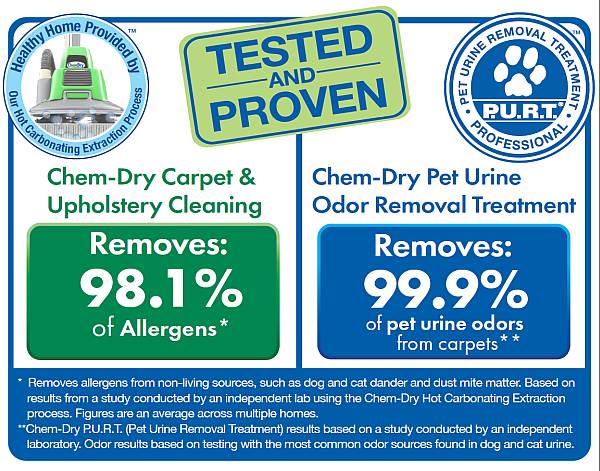
| Health Impact | High risk of mold/mildew | Removes 98% of allergens. |
| Fiber Safety | Risk of shrinkage/bleeding | WoolSafe® Approved. |
The rapid drying time of HCE is a critical technical advantage in Kanata. By returning the rug to a dry state within an hour or two, the process prevents wicking—the phenomenon where deep-seated stains migrate back to the surface during a slow drying period. This method also protects the integrity of the floorboards underneath the rug, as there is no excessive moisture to cause warping or rot.
The Science of Neutralization and pH Balancing
Effective rug restoration in Ottawa is an exercise in applied chemistry, specifically regarding the pH scale. Most indoor soils are acidic (oils, skin cells, food spills) and are theoretically removed with alkaline cleaners. However, the salts and ice-melts used on Kanata streets are already highly alkaline. Applying an alkaline cleaning agent to a salt-saturated rug can lead to a permanent pH imbalance.
Technicians must use specialized salt neutralizers that are slightly acidic to break down the $CaCl_{2}$ and $NaCl$ deposits. A common home remedy involves white vinegar (acetic acid), which has a pH of approximately 2.4, to help dissolve the alkaline rings. However, for professional-grade results, the extraction must be performed with a balanced rinse that removes both the contaminant and the neutralizing agent.
The HCE process addresses this by using The Natural®, a solution that contains no soaps or detergents that would contribute to pH instability. This allows the carbonated bubbles to lift the neutralized salt residues to the surface for immediate extraction. This scientific approach ensures that the delicate cuticles of wool fibers are preserved, maintaining the rug’s natural resilience and luster.
Regulatory Compliance and Environmental Stewardship in Ottawa
Professional area rug cleaning operations in Kanata must adhere to stringent environmental regulations to protect the local watershed. The City of Ottawa’s Sewer Use By-law No. 2025-94 prohibits the discharge of “mobile operation” wastewater into the storm sewer system, as these drains lead directly to local rivers and wetlands. Wastewater must be discharged into a sanitary sewer and must meet specific criteria regarding pH and temperature.
Local Regulatory Requirements for Cleaners in Kanata:
-
Wastewater Disposal: All extracted liquids must enter the sanitary sewer system via utility sinks or toilets, never outdoor drains.
-
pH Limits: Discharge must be between pH 5.5 and 12.0.
-
Temperature Control: Liquids must not exceed 60°C for sanitary sewer discharge.
-
Chemical Bans: Solutions containing phosphorus or nonylphenol ethoxylates are heavily restricted under CEPA 1999.
Chem-Dry Imperial ensures compliance by using Green-Certified products like The Natural®, which meets the EPA Safer Choice standards for human health and environmental impact. This commitment is vital for Kanata residents who value both the cleanliness of their homes and the preservation of the Ottawa River ecosystem.
Protecting High-Value Wool and Synthetic Rugs
The restoration of area rugs in Kanata requires a deep understanding of fiber morphology. Wool is a complex protein fiber prized for its durability and natural insulation. Its unique structure allows it to absorb significant amounts of moisture without feeling damp, but it also means it can hold onto liquid salt solutions long after the surface appears dry.
When salt crystals form inside a wool fiber, they cause internal stress that leads to brittleness. Furthermore, wool is highly susceptible to “browning”—a cellulosic oxidation that occurs during slow drying. The low-moisture HCE process is particularly beneficial for wool because it minimizes the volume of liquid introduced into the fiber core, thereby reducing the risk of color bleeding.
Synthetic rugs, typically made from nylon or polypropylene, are more resistant to moisture but are prone to oil attraction. These petroleum-based fibers can develop a permanent “gray path” if winter oils from asphalt and slush are not properly emulsified and extracted. While synthetics can withstand slightly more aggressive cleaning, they still require the pH balancing necessary to remove white salt rings without damaging the polymer chains.
Chem-Dry Imperial’s Restoration Process
As the “Healthy Home Authority” in Kanata, Chem-Dry Imperial has refined a multi-stage restoration process that addresses the specific geochemical challenges of Eastern Ontario. Their approach is founded on 25 years of local expertise and a suite of proprietary technologies that set the industry standard for textile hygiene.
The Core Technology: Hot Carbonating Extraction (HCE)
The Chem-Dry Imperial HCE system is a revolutionary departure from the “soak and suck” methods of the past. The process uses the power of carbonation—much like club soda—to lift contaminants. This method is WoolSafe® Approved and is recommended by health advocates for residents with severe respiratory sensitivities.
The Proprietary Solution: The Natural®
At the heart of every cleaning is The Natural®, a primary cleaning solution that is EPA Safer Choice certified.
-
Soap-Free: It contains no soapy detergents that leave behind sticky, soil-attracting residue.
-
Non-Toxic: Safe for children and pets who spend time crawling on rug surfaces.
-
Green-Certified: Meets the highest standards for biodegradability and environmental safety.
Specialized Treatment: P.U.R.T.® for Odor Eradication
Winter in Kanata often means pets are confined indoors, leading to increased accidental urination. Traditional cleaners merely mask odors with perfumes. Chem-Dry Imperial utilizes Pet Urine Removal Treatment (P.U.R.T.®), which contacts the source of the odor and triggers a molecular chemical reaction to destroy the urine crystals for good. This process has been proven by independent laboratories to remove 99.9% of pet urine odors.
Professional Certifications and Guarantees
The technicians at Chem-Dry Imperial are not just laborers; they are certified specialists. Every team member undergoes rigorous training on fiber identification, spot removal chemistry, and industry-leading standards. This expertise allows them to offer a 3 Risk-Free Guarantee: if the client is not satisfied with any part of the cleaning, the team will return to re-clean the area for free.
The Five-Step “Gold Standard” Rug Protocol:
-
Technical Assessment: Identification of fiber type, dye stability, and salt saturation levels.
-
Mechanical Dusting: Removal of up to 75% of dry soil and grit before any liquid is introduced.
-
HCE Application: Infusion of The Natural® and carbonated bubbles to emulsify oils and lift salts.
-
Specialized Extraction: High-powered suction removes suspended soil, leaving the rug nearly dry.
-
Post-Cleaning Grooming: Fiber realignment to ensure proper airflow and appearance retention.
FAQ
How does the “sink effect” impact my home’s air quality during an Ottawa winter?
Rugs act as massive filters, trapping allergens and dust. However, once they are saturated with winter salt and grit, they can no longer hold new particles, causing allergens to become airborne with every footstep. Professional cleaning resets this “filter” and is proven to remove 98% of allergens.
Why is Calcium Chloride (the blue salt) harder to clean than white Rock Salt?
Calcium Chloride ($CaCl_{2}$) is hygroscopic, meaning it pulls moisture from the air. This keeps rug entryways perpetually damp, leading to microbial growth and making the rug fibers feel “oily” or “sticky” compared to the powdery residue of Sodium Chloride ($NaCl$).
What is the molecular difference between wicking and a new stain?
Wicking occurs when a deep-seated stain in the rug backing migrates to the surface as the rug dries. This is caused by the capillary action of water in slow-drying high-moisture systems. A “new” stain is a surface-level spill that has not yet penetrated the rug’s foundation.
Are the cleaning chemicals used by Chem-Dry Imperial safe for my pets?
Yes. The Natural® is EPA Safer Choice certified, meaning it contains only ingredients deemed safe for human health and the environment. Because it uses no soaps or toxic detergents, there is no risk of chemical residue being ingested by pets or children.
Can salt permanently damage my wool rug?
Yes. Salt’s high alkalinity (pH 8-10) can “burn” natural fibers, causing them to become brittle and lose color. Additionally, salt crystals act as abrasives that micro-cut fibers at the base, leading to permanent thinning if not professionally extracted.
Does Chem-Dry Imperial comply with Ottawa’s Sewer Use By-law?
Absolutely. All wastewater is disposed of through sanitary sewer connections according to By-law No. 2025-94, ensuring that no contaminants reach the Ottawa River or local storm drains.
How often should I clean my rugs in Kanata?
Industry standards recommend deep cleaning every 12–18 months. However, in Kanata, high-traffic entryways often require a seasonal “winter recovery” clean in late February to remove the heavy salt and grit accumulation before it causes permanent damage.
Conclusion: The Path to Textile Resilience in the National Capital Region
The preservation of area rugs in Kanata is not merely a matter of appearances; it is a critical intervention for residential health and asset protection. This report has demonstrated that the geochemical challenges of Ottawa’s winter—specifically the corrosive and hygroscopic nature of road salts—render traditional steam cleaning methods obsolete and potentially hazardous. The Hot Carbonating Extraction (HCE) method, as practiced by Chem-Dry Imperial, provides the only scientifically sound solution for deep soil removal with minimal moisture risk.
By leveraging proprietary green chemistry and maintaining strict compliance with Ottawa’s environmental by-laws, Chem-Dry Imperial ensures that Kanata homes remain healthy, vibrant, and safe. For homeowners invested in the longevity of their high-value wool or synthetic rugs, the choice is clear: professional, low-moisture restoration is the only way to counteract the “silent killer” that is Ontario’s winter salt.