
Upholstery steam cleaning techniques deliver a deep clean using high heat to lift embedded soil and kill bacteria without leaving soapy residues. Chem-Dry’s Hot Carbonating Extraction process uses about 80% less water than traditional steam cleaning, ensuring carpets dry in hours, not days, and reducing mold risk.
Key Takeaways
- Steam cleaning kills 99.99% of germs and bacteria using high-temperature vapor that penetrates fibers and crevices.
- Steam cleaning uses high heat to lift embedded soil and kill bacteria without leaving soapy residues.
- Steam cleaning introduces excess water deep into fibers, creating mold and mildew risks within 24 to 48 hours.
- Steam cleaning leaves soapy residues that attract dirt, causing carpets to resoil faster than expected.
Why Did Steam Cleaning Become So Popular?
Steam cleaning gained widespread adoption because it delivers powerful sanitization without harsh chemicals. The method uses high heat and low moisture to break down dirt, grease, and bacteria on contact. Homeowners and property managers who once relied on chemical-heavy routines discovered a safer alternative that protects both surfaces and indoor air quality.
The shift toward steam-based methods accelerated during the pandemic. Conversations about high-heat cleaning increased as people sought ways to eliminate pathogens from upholstery, carpets, and hard surfaces. A steam cleaner produces vapor containing less than 5% water, making it safe for sealed hardwood and delicate fabrics alike. This low-moisture profile prevents the mold and mildew risks that traditional wet cleaning introduces.
How Effective Is Steam at Killing Germs?
Steam cleaning kills 99.99% of germs and bacteria when used correctly. The high-temperature vapor penetrates fabric fibers and surface crevices where chemical sprays often fail to reach. For households with children, pets, or allergy-sensitive occupants, this level of sanitization matters. The process trades heat for chemicals without sacrificing cleaning strength.
Is Steam Cleaning an Eco-Friendly Option?
Steam cleaning qualifies as an eco-friendly, all-natural cleaning method. It eliminates the need for detergent-based products that leave residues and introduce volatile organic compounds into indoor spaces. Commercial settings such as restaurants, hotels, and healthcare facilities have embraced steam systems for this reason. The approach aligns with green cleaning standards while maintaining the deep-cleaning performance that high-traffic environments demand.
Upholstery steam cleaning techniques rely on this same principle. Technicians apply controlled heat and minimal moisture to lift embedded soils from fabric without overwetting the cushioning beneath. The result is a faster-drying, residue-free surface that stays cleaner longer.
What Are the Hidden Drawbacks of Steam Cleaning?
Steam cleaning introduces excess water deep into carpet fibers and upholstery padding. This moisture burden triggers a cascade of problems that many homeowners and property managers discover only after the service truck leaves.
Traditional steam cleaning uses significantly more water than modern low-moisture methods. Chem-Dry’s approach, by contrast, relies on a fundamentally different mechanism that avoids saturating materials. The water volume difference matters because trapped moisture becomes a liability the moment technicians pack up their equipment.
How Does Excess Moisture Damage Carpets and Upholstery?
Excess moisture from steam cleaning creates mold and mildew risks beneath the surface. Steam cleaners produce hot vapor. The condensation that settles into backing and padding provides an ideal environment for microbial growth. Dupray notes that high-quality steam units generate vapor with less than 5% water content, yet many conventional machines lack that precision. When moisture lingers in dark, warm sublayers, mold colonies establish within 24 to 48 hours. Property owners then face odors and potential structural degradation that no surface-level inspection reveals.
Why Do Long Dry Times Cause Operational Problems?
Long dry times rank among the most disruptive hidden drawbacks of conventional steam cleaning. Carpets saturated by steam methods often require 24 hours or more to dry completely. During that window, foot traffic reintroduces soil, furniture cannot be replaced, and rooms remain effectively out of service. For commercial property managers, extended downtime translates directly into lost revenue or tenant complaints. Chem-Dry’s low-moisture process, detailed in its comparison to steam cleaning, dries carpets in hours rather than days, restoring usable space far faster.
Does Steam Cleaning Leave Behind Problematic Residues?
Many steam cleaning formulations rely on detergents that do not fully rinse away. These sticky remnants act as dirt magnets, pulling in soil from shoes and ambient air. Within weeks, high-traffic zones darken again, erasing the just-cleaned appearance. The cycle forces more frequent cleaning, higher cumulative costs, and frustration for clients who expected lasting results. Chem-Dry’s Hot Carbonated Extraction process uses no soaps, eliminating the residue problem at its source.
| Drawback | Steam Cleaning | Chem-Dry Hot Carbonated Extraction |
|---|---|---|
| Water Usage | High volume saturates fibers | Low moisture; carbonation lifts soil |
| Dry Time | 24+ hours typical | Hours, not days |
| Mold Risk | Elevated from trapped moisture | Minimal; fast drying prevents growth |
| Residue | Soapy film attracts new dirt | No soaps; no sticky residue |
Upholstery steam cleaning techniques carry the same risks when applied to furniture. Delicate fabrics absorb moisture unpredictably, and hidden frame components may rust or warp. The visible surface dries while internal layers remain damp, creating conditions for mildew that occupants smell long before they see.
How Does Carbonating Extraction Compare to Steam?
Chem-Dry’s Hot Carbonated Extraction (HCE) lifts dirt through carbonation, not saturation. Steam cleaning relies on high heat and water to loosen soil. The two methods differ sharply in moisture use, drying time, and cleaning mechanism.
What Makes the Cleaning Action Different?
Steam cleaning forces hot water and sometimes detergent into carpet or upholstery fibers. The heat helps dissolve grime, but the process leaves behind significant moisture. Chem-Dry’s HCE process works differently. Millions of microscopic carbonation bubbles penetrate deep into fibers. These bubbles lift soil and contaminants to the surface without heavy water saturation. The carbonation does the heavy lifting, not the water volume.
How Do Drying Times Compare?
Moisture is the critical variable. Steam cleaning introduces substantial water that can soak into backing and padding. Chem-Dry uses far less water than traditional steam cleaning. Carpets and upholstery dry in hours, not days. Fast drying reduces the risk of mold, mildew, and bacterial growth. Property managers and homeowners avoid the disruption of damp rooms and unusable spaces.
| Feature | Chem-Dry HCE | Steam Cleaning |
|---|---|---|
| Primary Mechanism | Carbonation bubbles lift soil | Hot water and heat dissolve soil |
| Water Usage | Low moisture | High moisture |
| Typical Dry Time | Hours | 1–2 days |
| Residue Risk | No soapy residues | Potential detergent buildup |
Does One Method Offer Healthier Results?
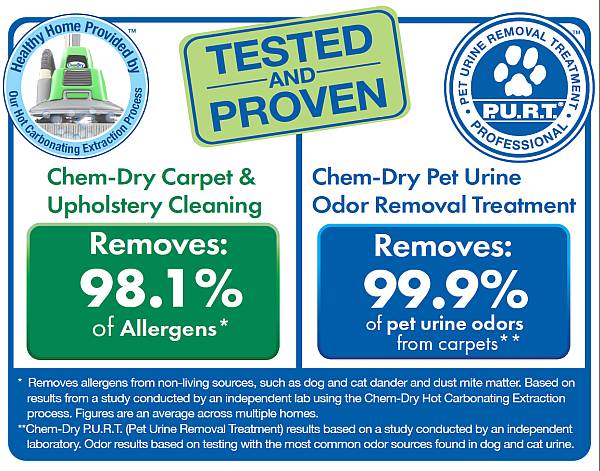
Independent lab studies show the Chem-Dry system removes common non-living allergens from carpets and upholstery. The low-moisture approach denies mold and bacteria the damp environment they need to thrive. When a sanitizer is applied, the process reduces airborne bacteria. Steam’s high heat kills some germs on contact, but lingering moisture can encourage new growth after the cleaning ends. For households with allergy concerns or commercial spaces needing quick turnaround, the health and speed advantages of carbonating extraction are decisive.
What Are the Best Upholstery Steam Cleaning Techniques?
The best upholstery steam cleaning techniques balance deep soil extraction with fiber safety. Upholstery Steam Cleaning Techniques fall into two distinct categories: traditional high-moisture steam and low-moisture carbonating extraction. Each method produces different results for drying time, residue, and long-term fabric integrity.
How does traditional steam cleaning work on upholstery?
Steam cleaners use high heat and low moisture to break down dirt, grease, and bacteria. The process effectively trades heat for chemicals without sacrificing strength. Steam cleaners serve as a practical solution for cleaning upholstery, mattresses, and other fabric surfaces. However, the moisture content, even when low, still introduces water into cushion foam and deep fiber layers. This moisture can extend drying times and create conditions for mold growth if ventilation is inadequate.
Why does Chem-Dry use carbonating extraction instead of steam?
Chem-Dry employs Hot Carbonated Extraction rather than conventional steam for professional upholstery cleaning. The carbonating process uses millions of microscopic bubbles to lift soil from fibers without saturating the material. Low-moisture methods like carbonating extraction prove safer for upholstery fibers than high-moisture steam. Fabrics dry in hours instead of days, which prevents water damage and microbial growth inside cushions. The process also avoids soapy residues that attract dirt back to upholstery fibers, keeping surfaces cleaner longer after the service.
| Technique | Moisture Level | Drying Time | Residue Risk |
|---|---|---|---|
| Hot Carbonated Extraction (Chem-Dry) | Very low | 1-2 hours | None |
| Traditional Steam Cleaning | Moderate | 6-24 hours | Possible soap residue |
Professional upholstery cleaning is a core offering of Chem-Dry Canada. The company’s upholstery cleaning services connect homeowners and businesses with trained local technicians. These technicians apply the carbonating process to remove embedded soil, allergens, and stains without overwetting delicate fabrics. The result is a deep clean that preserves upholstery structure and appearance.
Which Method Is Best for Your Home or Business?
Chem-Dry’s Hot Carbonated Extraction process delivers the fastest-drying, deepest clean for both residential and commercial settings. The method uses significantly less water than traditional steam cleaning, allowing carpets and upholstery to dry in hours rather than days.
How does drying time affect a home or business?
Slow-drying carpets create serious risks. Moisture trapped in fibers for days promotes mold growth and mildew odors. Homes with children and pets face heightened exposure to these hazards. Businesses lose usable space and risk customer complaints when floors remain wet. Chem-Dry’s low-moisture approach eliminates these problems. Carpets dry in hours, not days. Operations resume quickly. Families return to clean, safe rooms without waiting.
What makes a cleaning method safe for allergy-sensitive households?
Allergen removal depends on both the cleaning agent and the water volume. Chem-Dry’s process lifts embedded allergens without saturating carpet backing or padding. Households with allergy-sensitive occupants, children, and pets benefit from this approach. The system avoids soapy residues that attract new dirt. Surfaces stay cleaner longer. Indoor air quality improves immediately after service.
| Criteria | Chem-Dry Hot Carbonated Extraction | Traditional Steam Cleaning |
|---|---|---|
| Drying Time | Hours | 1–2 days |
| Water Usage | Low moisture | High volume |
| Residue Left | None | Soapy film possible |
| Mold/Mildew Risk | Minimal | Elevated |
| Best For | Homes with kids, pets, allergies; businesses needing fast turnaround | Budget-focused projects with extended downtime |
Chem-Dry Canada serves homeowners, renters, property managers, and businesses through a nationwide franchise network. Consistent service standards apply across every location. Technicians arrive with proprietary equipment and training. The company’s full range of professional cleaning services covers upholstery, area rugs, pet odor treatment, and more. Upholstery steam cleaning techniques vary widely in water volume and chemical load. Chem-Dry’s carbonated extraction method stands apart by prioritizing health, speed, and lasting results for every client.
FAQ
Why does steam cleaning dry faster than traditional methods?
Traditional steam cleaning drives large volumes of water deep into carpet fibers, which prolongs drying and raises mold risk. Chem-Dry’s Hot Carbonating Extraction uses about 80% less water than that traditional approach, so carpets dry in hours, not days, and avoid mold risks.
Does steam cleaning leave behind any residues?
Steam cleaning leaves no soapy residues because it relies on high heat rather than detergents. This residue-free result keeps surfaces cleaner longer and prevents the rapid resoiling that detergent-based methods cause.
Is steam cleaning safe for households with children and pets?
Steam cleaning kills 99.99% of germs using high-temperature vapor without harsh chemicals. This makes it a family- and pet-safe option that protects indoor air quality while delivering deep sanitization.
Conclusion
For homeowners and businesses alike, the choice between steam cleaning and carbonating extraction comes down to priorities. While steam offers high heat sanitization, its moisture creates drying delays and mold risks that compromise health and convenience. Chem-Dry’s low-moisture carbonating process delivers a deeper, faster-drying clean without soapy residues, making it the superior choice for allergy-sensitive households, pet owners, and commercial spaces needing quick turnaround. Selecting this method ensures lasting cleanliness and a healthier indoor environment.